Remote coasts often hold their richest life in the narrow band between low and high water, and just beyond it. Seeing it well is mostly a matter of timing, patience and restraint.
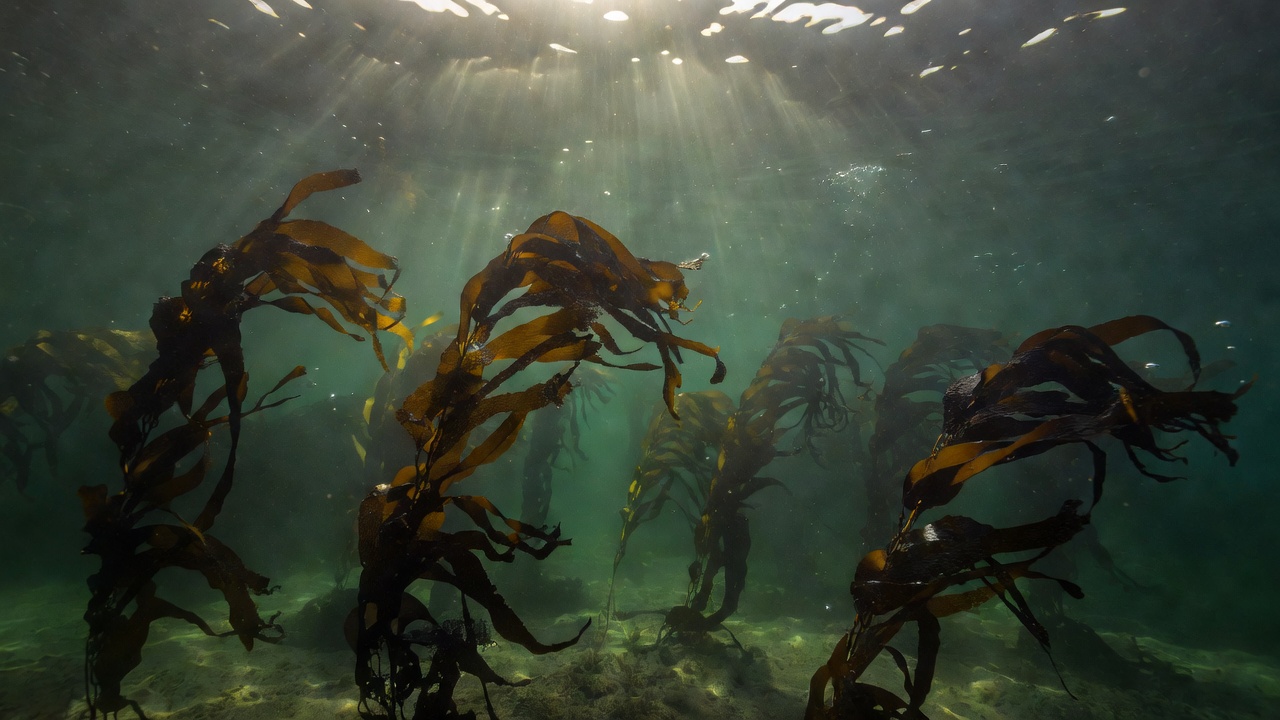
A kelp forest in cold shallow water. Illustrative; location not identified.
The intertidal zone
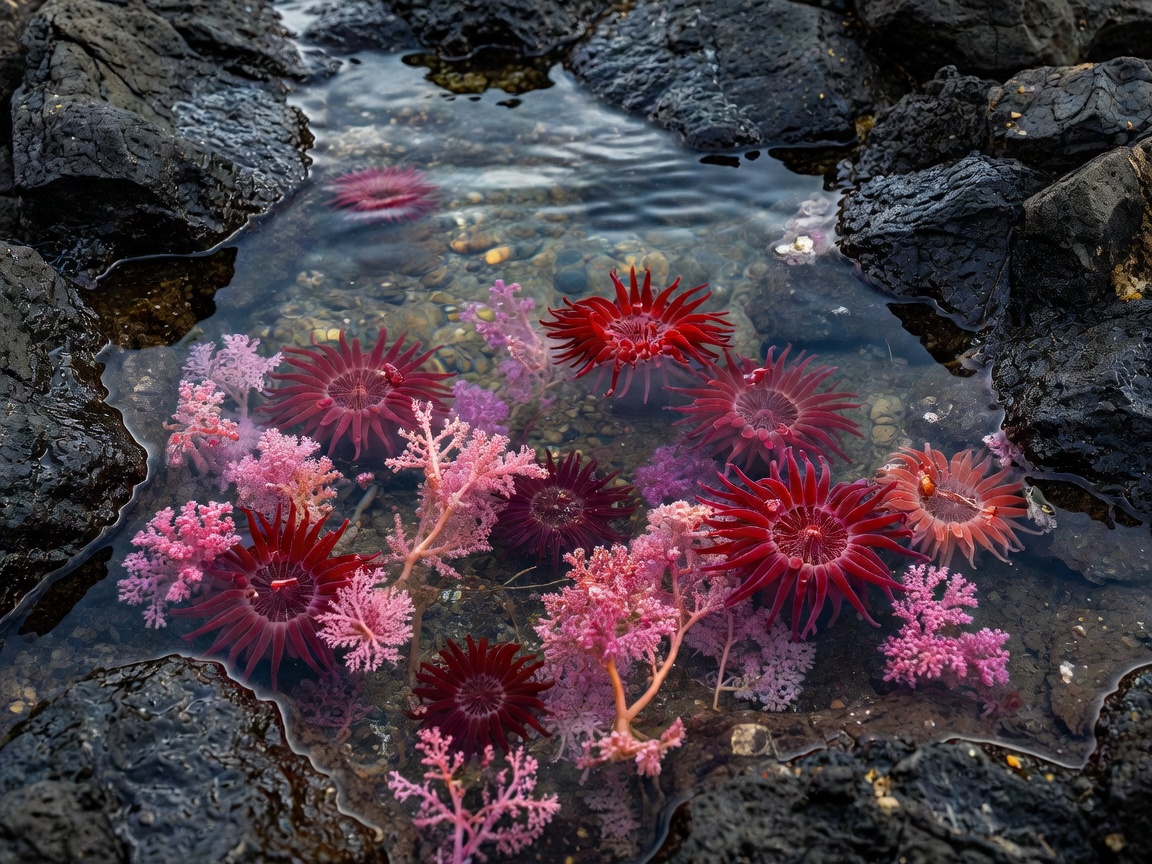
The shore is organised by exposure. Near the top, lichens and periwinkles tolerate hours of air and sun. Lower down, barnacles, mussels and limpets crowd the rock. At the lowest spring tides, anemones, starfish and sponges appear that are usually underwater. Spring tides, which follow new and full moons, expose the most; time a walk for about an hour before low water and you will follow the sea down rather than race it back.
Illustrative: anemones in a rock pool at low tide.
Rock-pool manners
Lift stones gently and replace them the same way up.
Do not pull limpets or anemones from rock.
Use your hands or a clear tub briefly, then return animals where you found them.
Leave shells: many are homes for hermit crabs.
Ecology notes
Kelp forests
In the North Atlantic, kelps such as Laminaria form dense underwater forests that shelter fish, crabs and juvenile animals and dampen wave energy. In the Pacific, giant kelp can grow tens of metres tall. Snorkellers should avoid trampling holdfasts in the shallows and never cut fronds.
Seagrass meadows
Seagrasses are flowering plants that store carbon and nurse young fish. In the Mediterranean, Posidonia oceanica meadows are protected and very slow to recover from anchor damage. If you charter a boat, ask the skipper to anchor on sand or use moorings.
Maerl beds
Maerl is a slow-growing, unattached red seaweed that builds pinkish gravel beds, sometimes taken for coral fragments on beaches. Living beds grow only millimetres a year and are easily damaged by dredging and anchoring. Leave maerl on the beach.
Seabird colonies
Atlantic puffins return to burrows on islands such as Mykines in the Faroes, Fair Isle and Skomer from roughly April to August. Gannets pack cliffs and stacks; St Kilda's Boreray holds one of the largest colonies in the world. Stay on paths, keep low and still, and back away if birds become agitated or fly off nests.
Seals
Around Britain, grey seals pup mainly in autumn, common seals in summer. Mothers may leave pups alone on beaches for hours. Keep well back, keep dogs leashed, and never move a pup. Report concerns to a local marine rescue group instead.
Whales, dolphins and porpoises
Choose operators who follow recognised codes such as the UK WiSe scheme: approach slowly, never chase, and let animals choose whether to come closer. From land, calm days and high vantage points give the best sightings.
Biosecurity: what you carry matters
Islands are uniquely vulnerable to introduced species. Rats, mice, cats and invasive plants have devastated seabird and endemic populations worldwide. Some of the largest conservation projects ever undertaken have been island eradications: South Georgia was declared rat-free in 2018 after a multi-year programme, and Lord Howe Island completed a rodent eradication in 2019. The Galápagos and Ogasawara Islands run inspections to keep new species out.
Before landing, check bags for stowaway rodents and insects, clean soil and seeds from boots, tent pegs and tripods, and never bring fresh produce where it is prohibited. Small actions protect investments that took years.
Sunscreen and reefs
Palau became the first country to ban sunscreens containing certain chemicals, including oxybenzone, from 2020, and in 2017 it introduced the Palau Pledge, stamped into visitors' passports, asking them to act in ways that protect the islands. Wherever you swim, a rash vest reduces the amount of sunscreen entering the water.
Simple rule: if an animal changes its behaviour because of you, you are too close. Back off and let the coast carry on. For safe ways to reach these places, see Transport.
We use cookies Some cookies are needed for the site to work. Others help us understand how it is used. You can change your choice later. Read more