Measuring remoteness honestly
Travel writing tends to measure isolation in kilometres. Islanders measure it in sailings. An island 30 km offshore with one ferry a week can be more cut off than one 300 km away with a daily flight. Before choosing a destination, we look at four things: frequency of transport, how exposed that transport is to weather, what the island can supply locally, and how many beds exist for visitors. Those four factors decide whether your visit will be comfortable, tense or impossible.
They also decide your impact. A dozen extra people on a small island is a meaningful share of the population. They use the same water supply, the same shop and, if something goes wrong, the same nurse.
Tristan da Cunha: the ship decides
Tristan da Cunha, a British Overseas Territory in the South Atlantic, is often described as the most remote inhabited archipelago on Earth. Around 250 people live in Edinburgh of the Seven Seas, the only settlement, on a narrow plain beneath a volcano that erupted in 1961 and forced the whole community to evacuate to Britain until 1963.
There is no airstrip. Passage comes on fishing vessels and an annual relief voyage from Cape Town, roughly 2,800 km away. Prospective visitors apply to the island administration in advance, and berths are scarce. Even with a ticket, landing depends on swell at the small harbour, where boats carry people ashore. Visitors should arrive with patience and flexible plans, and leave expecting the departure to be weather-dependent too.
Foula: a community of around thirty
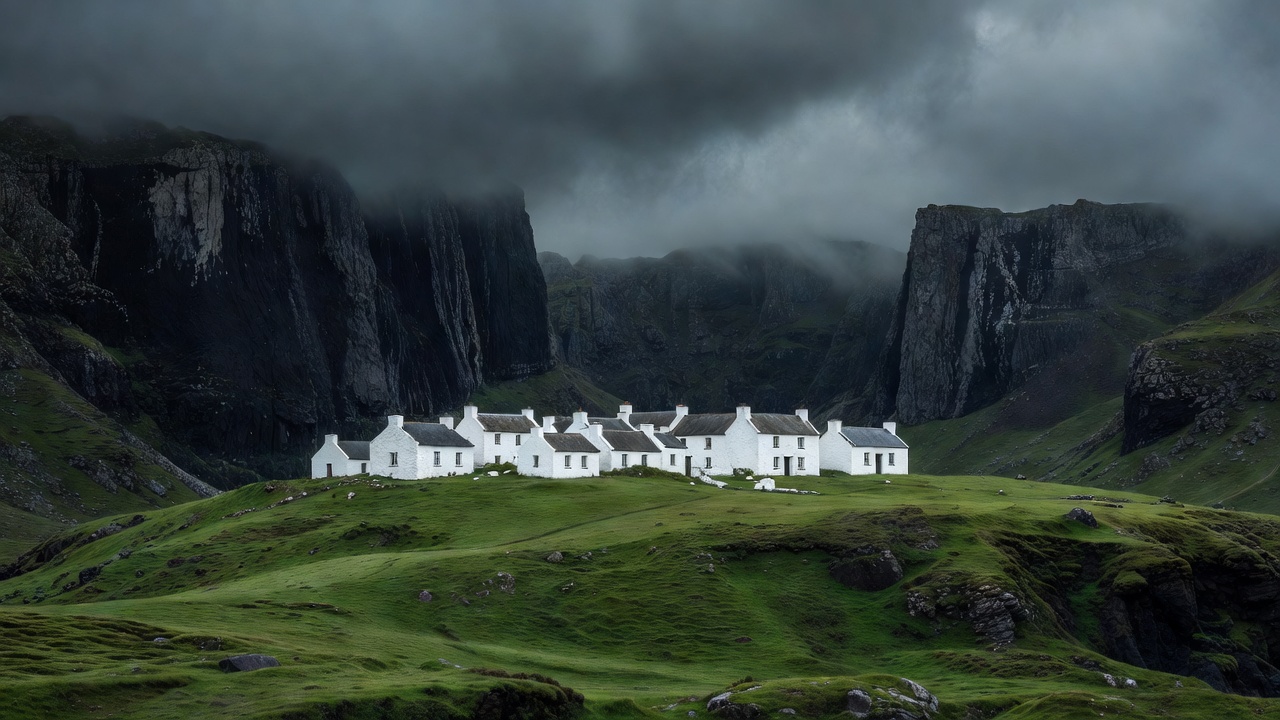
Foula lies about 20 miles west of the Shetland mainland. A small passenger ferry runs from Walls in a crossing of around two hours, and light aircraft fly from Tingwall. Both are cancelled regularly in bad weather. The island's western cliffs reach 376 metres at the Kame, the second highest sea cliff in Britain after Conachair on St Kilda.
Foula keeps the old Julian calendar for its winter festivals, celebrating Yule on 6 January. Accommodation is extremely limited, so arrangements must be confirmed before travelling.
Ogasawara: a week defined by one ship
The Ogasawara Islands sit around 1,000 km south of central Tokyo yet are administratively part of the capital. With no airport, the Ogasawara Maru ferry carries passengers to Chichijima in about 24 hours, usually with one round trip roughly every six days. That rhythm means most visits last as long as the ship stays in port, plus the time it is away. Typhoons in late summer and autumn can shift sailings. The islands became a UNESCO World Heritage Site in 2011 for their endemic species, many of which evolved in isolation and are vulnerable to introduced plants and animals.
Lord Howe Island: capacity written into policy
Lord Howe Island, around 600 km east of the New South Wales coast, limits tourist accommodation so that no more than 400 visitors stay at any one time. It is a model of how a small community can plan around its limits. The island was inscribed on the World Heritage List in 1982, and in 2019 it carried out a major rodent eradication to protect birds and invertebrates. Flights from the mainland have tight baggage limits. Secure a bed first, then the flight.
St Kilda: remoteness after people left
St Kilda, around 64 km west of the Outer Hebrides, was evacuated in 1930 at the request of its remaining residents, after decades of declining population and hard winters. The archipelago is now cared for by the National Trust for Scotland and holds dual World Heritage status for its natural and cultural value. Day boats run from Harris and Skye in settled weather, but landings at Village Bay depend on swell, and many trips turn back or circle the cliffs without landing. Conachair rises 430 metres, the highest sea cliff in Britain.
Pitcairn: small population, big responsibility
Pitcairn's population of around 40 people, many descended from the Bounty mutineers and their Tahitian companions, live in Adamstown. Visitors usually travel by passenger and supply vessel from Mangareva in French Polynesia, a voyage of about a day and a half, and are brought ashore by longboat at Bounty Bay. Medical care is basic, so health and insurance planning matters more here than almost anywhere.
Questions to ask before you choose
- How many sailings or flights run in the month I plan to visit, and what happens if one is cancelled?
- Is accommodation confirmed in writing, and who can I contact on the island?
- What can I buy locally, and what should I bring?
- Is there a nurse or doctor, and how are emergencies evacuated?
- Are there permits, landing fees or approval processes?